

Principles of the Transliteration
Aramaic and Arabic are close relatives of Hebrew, and transliteration into the Hebrew writing system makes many words recognizable to a Hebrew speaker. The transliteration model is designed to make Arabic words easily recognizable to a Hebrew reader; pronunciation follows Literary Arabic.
In Hebrew, the letters בגדכפת have, or historically had, two variants of pronunciation: plosive and fricative. Dagesh Qal denotes a plosive variant. The lesser-known overline called rafe may denote a fricative one. The converter uses both signs. It also uses geresh to mark a letter whose sound differs from its Hebrew pronunciation when both variants are plosive or both are fricative. Where possible, the converter does not use modern Hebrew geresh-based Arabic transliteration. In modern Israeli Hebrew, only כ and פ still have two pronunciations. In Liturgical Mizrahi Hebrew, all בכפת letters have two pronunciations; ג and ד retain two pronunciations in Yemeni Hebrew. The converter uses Liturgical Mizrahi and Yemeni pronunciations of בגדכפת to reflect specific Arabic sounds in transliterated text.
In Arabic, פ/ف always represents F, ב/ب always represents B, and כ/ك always represents K. However, د ط ح ص ت, the equivalents of דטחצת, each belong to a pair of sounds, like Hebrew בגדכפת. The variant whose pronunciation differs from the basic Hebrew or Aramaic pronunciation—ordinarily a fricative—is marked with an additional dot that mostly acts like rafe. Although ح has the same sound as Mizrahi Hebrew ח, while خ has the same sound as כֿ, the converter maps خ to ח׳. Earlier versions used the phonetically consistent כֿ, but خ is linked etymologically with ח, not כֿ. It is thought that two Proto-Semitic sounds that remain distinct in Arabic merged into one Hebrew sound and letter. Conversely, one Arabic or Proto-Semitic sound represented by ك is thought to correspond to two distinct Hebrew sounds.
With dagesh and without rafe, דכת in transliterated text denote the same sounds as in modern Israeli Hebrew; ט denotes the Arabic or Mizrahi Hebrew [tˤ]. However, צּ denotes the consonant ض DAD, the plosive variation of tsade, which sounds closer to D, while Hebrew צ always denotes an affricative. For example, أرض, the Arabic word for “earth,” is written with DAD and is transliterated as ארץּ, making it easily recognizable. With rafe and without dagesh, the דטת letters denote the following sounds according to the description:
| דֿ/ذ | the “th” sound in the English word “this” |
| טֿ/ظ | the “th” sound in the English word “thus” |
| תֿ/ث | the “th” sound in the English word “thin” |
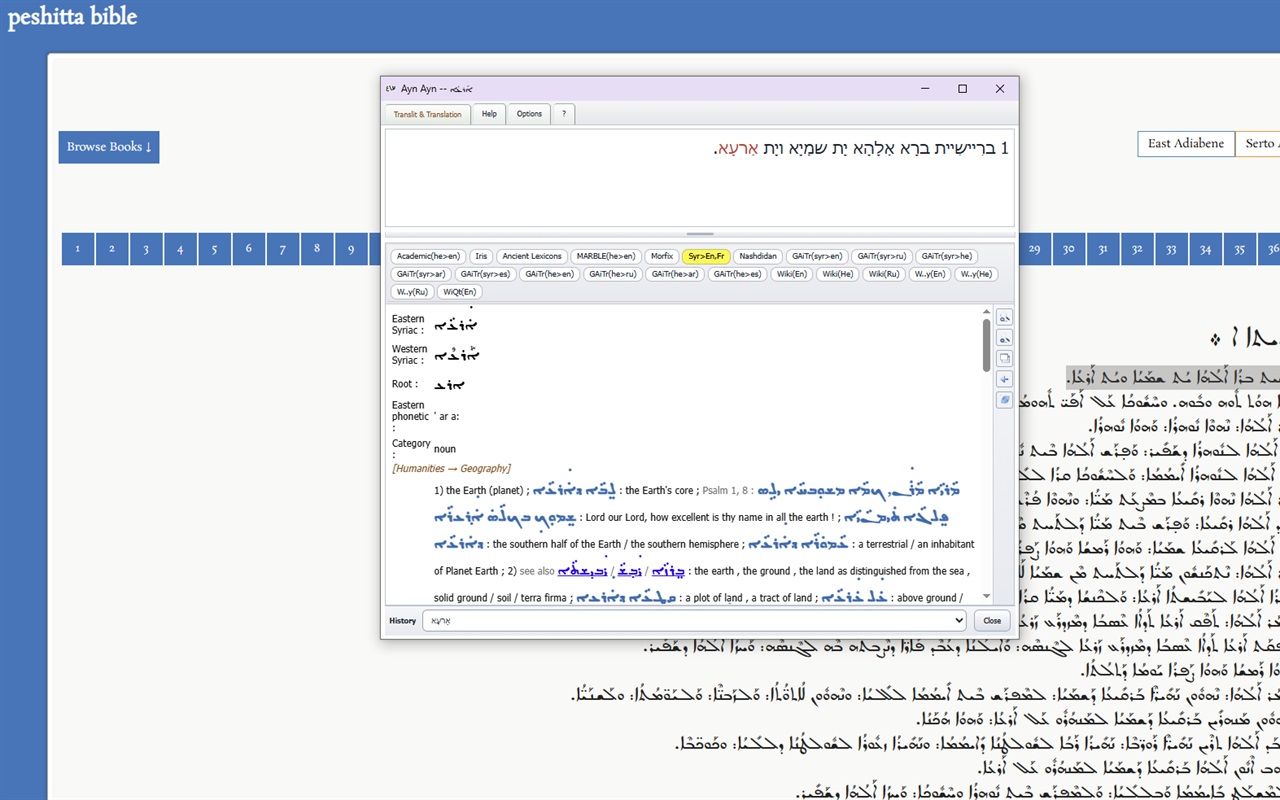
The letter غ GHAYN denotes an R-like sound, the voiced uvular fricative. Many Ashkenazi Jews pronounce ר this way. It would be phonetically consistent to transliterate غ as רֿ, but the converter maps it to עֿ because غ is linked etymologically with ע, not ר. In converted Syriac text, GHAYN ordinarily maps to גֿ; for example, in the word בגֿדד, a special dot “רוככא” marks a “soft” letter in the original text.
The letters ر/ר represent the same sound. In Arabic, it is a trill close to the Amharic or Russian R. This sound is very difficult for most Ashkenazi Jews to pronounce. During the Holocaust, local Nazi collaborators in Eastern Europe used the Russian word “KUKURUZA”/“кукуруза” as a shibboleth to identify Jews for extermination.
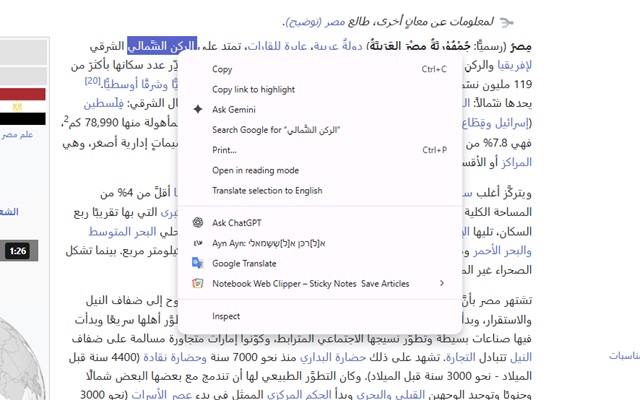
The letter and diacritic sign ء HAMZA denotes a glottal stop, while alif without HAMZA mostly denotes a long /aː/ vowel. In Hebrew, א denotes a mandatory glottal stop when the alef has a shva, אְ, or when the letter immediately before the alef has a shva. The converter treats HAMZA as a mandatory stop and places alef with shva there, but omits a leading אְ. For example, إِسْرَائِيل is transliterated as אִסְרָאְיִיל.
ى ʾalif maqṣūrah (ألف مقصورة) denotes a short /a/ at the end of a word. It looks like a dotless ـي, and the converter renders it as אַ. A problem arises because Egyptians ordinarily omit the dots from ي; the converter cannot process such a form properly and renders אַ in place of the proper י.
The shva in converted Arabic text should never be pronounced: like sukun (سكون), it denotes the absence of a vowel. Kamatz denotes long /aː/ in converted Arabic and Eastern Syriac texts, but /o/ in converted Western Syriac.