Principles of the Transliteration (Add-On Version 3.1+)
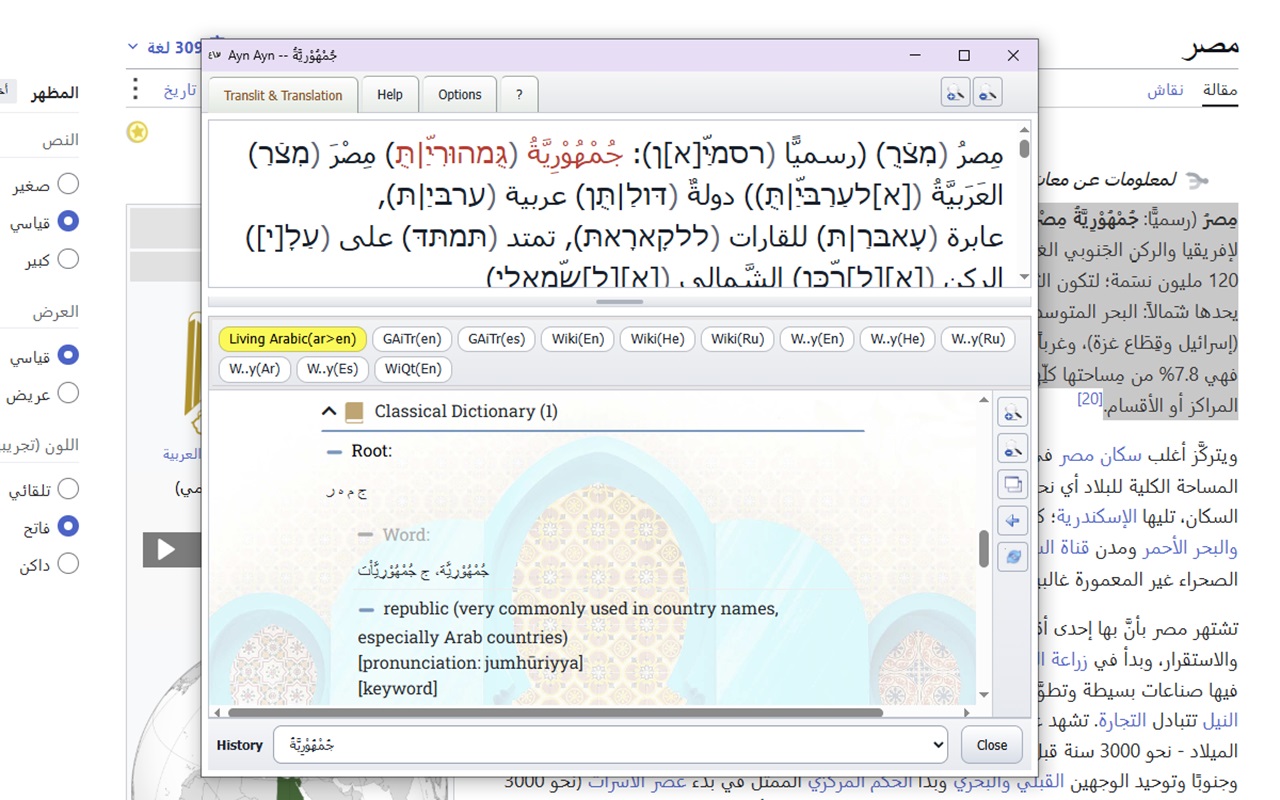
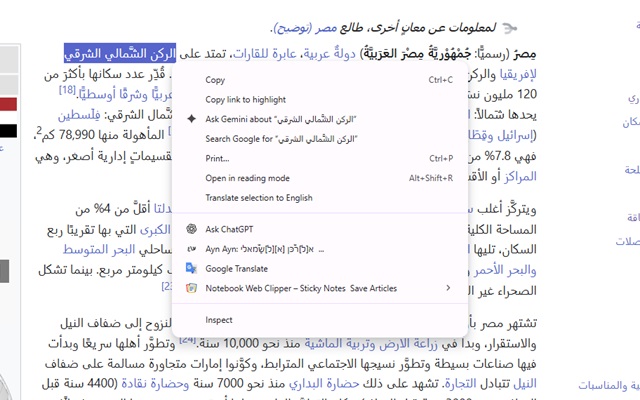
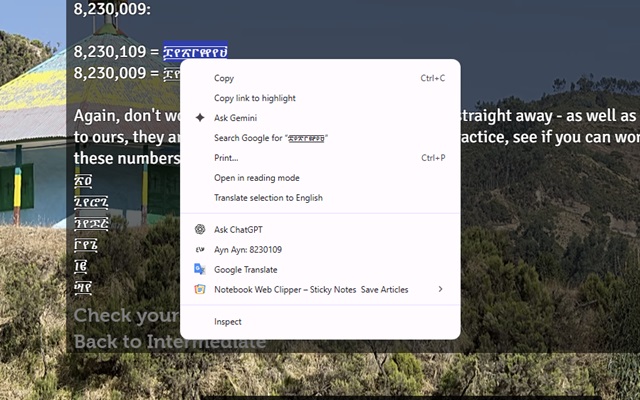
Aramaic and Arabic are close relatives of Hebrew, and transliteration into the Hebrew writing system makes many words recognizable to a Hebrew speaker. The transliteration model is designed to make Arabic words easily recognizable to a Hebrew reader; pronunciation follows Literary Arabic.
For Arabic words, the converter reads letters together with their vowel marks and uses the word form and surrounding text where the spelling is ambiguous. It recognizes the definite article with attached conjunctions or prepositions, but also distinguishes a similar beginning that belongs to the word itself. A silent article lam before a sun letter may appear in square brackets, as in الشَّمْس (א[ל]שַّמס). When the article is clear, the converter can restore an unwritten shadda on the sun letter.
In Hebrew, the letters בגדכפת have, or historically had, two variants of pronunciation: plosive and fricative. Dagesh Qal denotes a plosive variant. The lesser-known overline called rafe may denote a fricative one. The converter uses both signs. It also uses geresh to mark a letter whose sound differs from its Hebrew pronunciation when both variants are plosive or both are fricative. Where possible, the converter does not use modern Hebrew geresh-based Arabic transliteration. In modern Israeli Hebrew, only כ and פ still have two pronunciations. In Liturgical Mizrahi Hebrew, all בכפת letters have two pronunciations; ג and ד retain two pronunciations in Yemeni Hebrew. The converter uses Liturgical Mizrahi and Yemeni pronunciations of בגדכפת to reflect specific Arabic sounds in transliterated text.
In Arabic, פ/ف always represents F, ב/ب always represents B, and כ/ك always represents K. However, د ط ح ص ت, the equivalents of דטחצת, each belong to a pair of sounds, like Hebrew בגדכפת. The variant whose pronunciation differs from the basic Hebrew or Aramaic pronunciation—ordinarily a fricative—is marked with an additional dot that mostly acts like rafe. Although ح has the same sound as Mizrahi Hebrew ח, while خ has the same sound as כֿ, the converter maps خ to ח׳. Earlier versions used the phonetically consistent כֿ, but خ is linked etymologically with ח, not כֿ. It is thought that two Proto-Semitic sounds that remain distinct in Arabic merged into one Hebrew sound and letter. Conversely, one Arabic or Proto-Semitic sound represented by ك is thought to correspond to two distinct Hebrew sounds.
With dagesh and without rafe, דכת in transliterated text denote the same sounds as in modern Israeli Hebrew; ט denotes the Arabic or Mizrahi Hebrew [tˤ]. However, צּ denotes the consonant ض DAD, the plosive variation of tsade, which sounds closer to D, while Hebrew צ always denotes an affricative. For example, أرض, the Arabic word for “earth,” is written with DAD and is transliterated by default as אְרץּ, making it easily recognizable. With rafe and without dagesh, the דטת letters denote the following sounds according to the description:
| דֿ/ذ | the “th” sound in the English word “this” |
| טֿ/ظ | the “th” sound in the English word “thus” |
| תֿ/ث | the “th” sound in the English word “thin” |
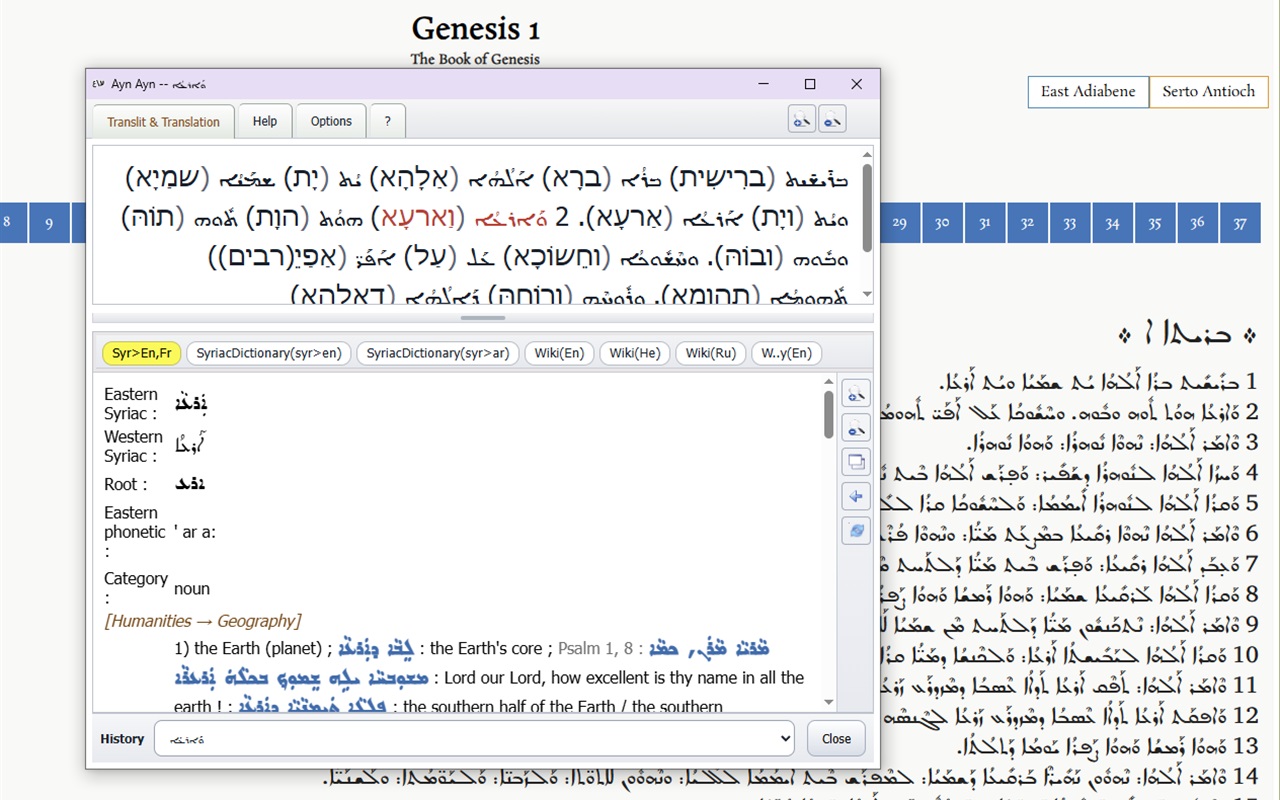
The letter غ GHAYN denotes an R-like sound, the voiced uvular fricative. Many Ashkenazi Jews pronounce ר this way. It would be phonetically consistent to transliterate غ as רֿ, but the converter maps it to ע׳ because غ is linked etymologically with ע, not ר. In converted Syriac text, softened gamal is rendered as גֿ; for example, ܒܓ݂ܕܕ → בגֿדד. A special dot “רוככא” marks a “soft” letter in the original text.
The letters ر/ר represent the same sound. In Arabic, it is a trill close to the Amharic or Russian R. This sound is very difficult for most Ashkenazi Jews to pronounce. During the Holocaust, local Nazi collaborators in Eastern Europe used the Russian word “KUKURUZA”/“кукуруза” as a shibboleth to identify Jews for extermination.
The letter and diacritic sign ء HAMZA , whether written independently or on a carrier, denotes a glottal stop /ʔ/, while ordinary Arabic alif without HAMZA usually indicates a long /aː/ vowel. The converter represents HAMZA by Hebrew alef א. In this transliteration, an alef carrying its own vowel point—including shva or a hataf—is consonantal. A shva belonging to the immediately preceding consonant can remain there, allowing the hamza's alef to carry its following vowel directly. A word-initial alef is also treated as consonantal.
Alif can also preserve an older orthographic notation of a glottal stop. In traditional spellings such as مِائَة (one hundred), this retained alif occurs alongside the modern seated HAMZA denoting the same glottal stop. The duplication is orthographic, not phonetic: the alif itself is now ignored. The Add-On omits it without square brackets and handles HAMZA normally; for example, مِائَة → מִ[י]אֲ|תּ with hataf-patah enabled. This handling applies to a bare alif, with neither HAMZA nor its own vowel except optional sukun, after kasra before HAMZA on yeh, or after damma before HAMZA on waw. Missing vowels in recognized hundred-word forms are recovered only where unambiguous, with one practical exception: unpointed مائتان and مائتين are preferentially read as the numeral 200. Explicit conflicting vowel marks take precedence; other ambiguous forms such as مائتي are not covered by this preference, and competing morphological analyses are retained. The same omission is applied before Ancient Hijazi reading reconstruction: the retained alif is not treated as a long /aː/ vowel, and the following HAMZA is then processed according to that mode's reconstruction rules. For the historical orthography, see Al-Jallad (2021), §3.2.
By default, the Add-On uses hatafs where possible to represent HAMZA together with a following short vowel. Hataf-patah is used for the corresponding short /a/, while hataf-qamatz represents short /u/ (Arabic damma). For HAMZA with kasra, the default notation is hataf-hiriq, written as shva + hiriq: إِ → אְִ. The user may select hataf-segol instead of hataf-hiriq if preferred. If a preceding consonant has consonantal sukun, its shva is retained and HAMZA takes the short vowel directly, regardless of the hataf settings.
If the corresponding hataf notation is disabled, the Add-On represents HAMZA by one alef with its ordinary vowel point directly beneath it. A second alef is not inserted merely to carry a written vowel. Thus, ordinary hiriq is used instead of hataf-hiriq for short /i/, and kubutz instead of hataf-qamatz for short /u/.
Hatafs can represent only short vowels. Long vowels following HAMZA are therefore written using the ordinary Hebrew notation for long vowels, regardless of the hataf settings: qamats for /aː/, hiriq male for /iː/, and shuruk for /uː/. The same alef carries qamats or hiriq and represents the glottal stop: medial /ʔiː/ is written אִי. Before shuruk, the vowel is on waw, so the alef retains its shva: אְוּ.
When HAMZA's vowel is unwritten, shva identifies the alef as a consonant rather than a vowel-lengthening letter. In this use, shva marks the glottal stop without asserting that the missing vowel is sukun. If unwritten kasra is represented by ordinary hiriq, a separate alef may carry that vowel after אְ inside a word. An additional initial אְ is always omitted because word-initial alef is already consonantal: إيمان → אִימָאן. This shortening does not remove a hataf or the shva belonging to a preceding consonant.
Meteg מֶתֶג, also called gaʿya גַּעְיָה, is a traditional Hebrew reading sign: a small vertical stroke below the letter, usually to the left of its vowel point, as in אָֽ. In pointed Tanakh Hebrew, it marks secondary stress—a weaker accent accompanying the word's main stress—and can indicate that a vowel should be given its full or lengthened pronunciation. See Gesenius, §16. AynAyn uses this association with sustained pronunciation to represent the vowel elongation indicated by Arabic Madda.
Alif Madda آ denotes /ʔaː/ and is written אָֽ: one consonantal alef with qamats and meteg. No additional alef with shva is inserted. A preceding consonant's shva is retained where appropriate; for example, قُرْآن → קֻרְאָֽן.
Standalone Qur'anic Madda marks ٓ and ۤ indicate vowel elongation. The converter represents this indication by meteg next to the corresponding Hebrew vowel, including hiriq male and shuruk, without adding another HAMZA. Meteg follows the vowel when its written Arabic carrier differs from the Hebrew vowel's carrier, and repeated marks for the same vowel produce one meteg. By default, a separately typed alif + Madda is treated as elongation; turning off Read standalone Madda as vowel elongation permits an ambiguous combination to be read as Alif Madda. Alif after written fatha remains a vowel-lengthening carrier.
For example, the modern Arabic spelling إِسْرَائِيل is transliterated as אְִסרָ[י]אִיל. The Qur'anic spelling إِسْرَٰٓءِيلَ is transliterated as אְִסרָֽאִילַ. In both forms, the initial HAMZA with short /i/ is represented by hataf-hiriq, while the medial HAMZA before long /iː/ requires ordinary hiriq male on the same consonantal alef. Meteg preserves the written Madda's indication of elongation. Square-bracketed י or ו associated with HAMZA are annotations of its source spelling carrier.
The Add-On also provides an Ancient Hijazi reading reconstruction mode, based on research into the early Qur'anic consonantal text and its historical pronunciation. In this mode, HAMZA is generally omitted in positions where it is reconstructed as absent from Ancient Hijazi pronunciation, and the corresponding historical vowel sequences or long vowels are reconstructed instead. Written Madda's meteg is retained with the resulting vowel.
ى ʾalif maqṣūrah (ألف مقصورة) denotes a long /aː/ vowel at the end of a word in Literary Arabic. It looks like a dotless ـي. The converter marks the long vowel with kamatz and may show the silent source letter in square brackets, as in عَلَى → עַלָ[י]. Egyptians often omit the dots from final ي, making it look like alif maqsurah. The converter uses vowel marks, recognized word forms, and related forms in the same text to distinguish the two readings. When the evidence identifies an undotted final yeh, it renders Hebrew י; for example, فِى → פִֿי. Recovery is not applied when the reading remains ambiguous.
The shva in converted Arabic text should not be pronounced as an additional vowel. When it corresponds to sukun (سكون), it denotes the absence of a following vowel; in unvocalized text, it can also mark HAMZA's consonantal role without asserting the missing vowel. Kamatz denotes long /aː/ in converted Arabic and Eastern Syriac texts, but /o/ in converted Western Syriac.
Qur'anic initials are read by letter names when their characteristic marks identify them; for example, الٓمٓ → אֲלִףֿ לָֽאם מִֽים. Unmarked الم is also read by letter names before ذلك when preceded by the full basmala or followed by the first-verse marker. Elsewhere, the unmarked form remains ambiguous.